
In-situ: Removed as if by magic
Biological-chemical in-situ remediation of LHKWs
Volatile halogenated hydrocarbons are difficult to remove from soil. Bernadette Bohnert and her team used an innovative method for contaminant remediation – with success!
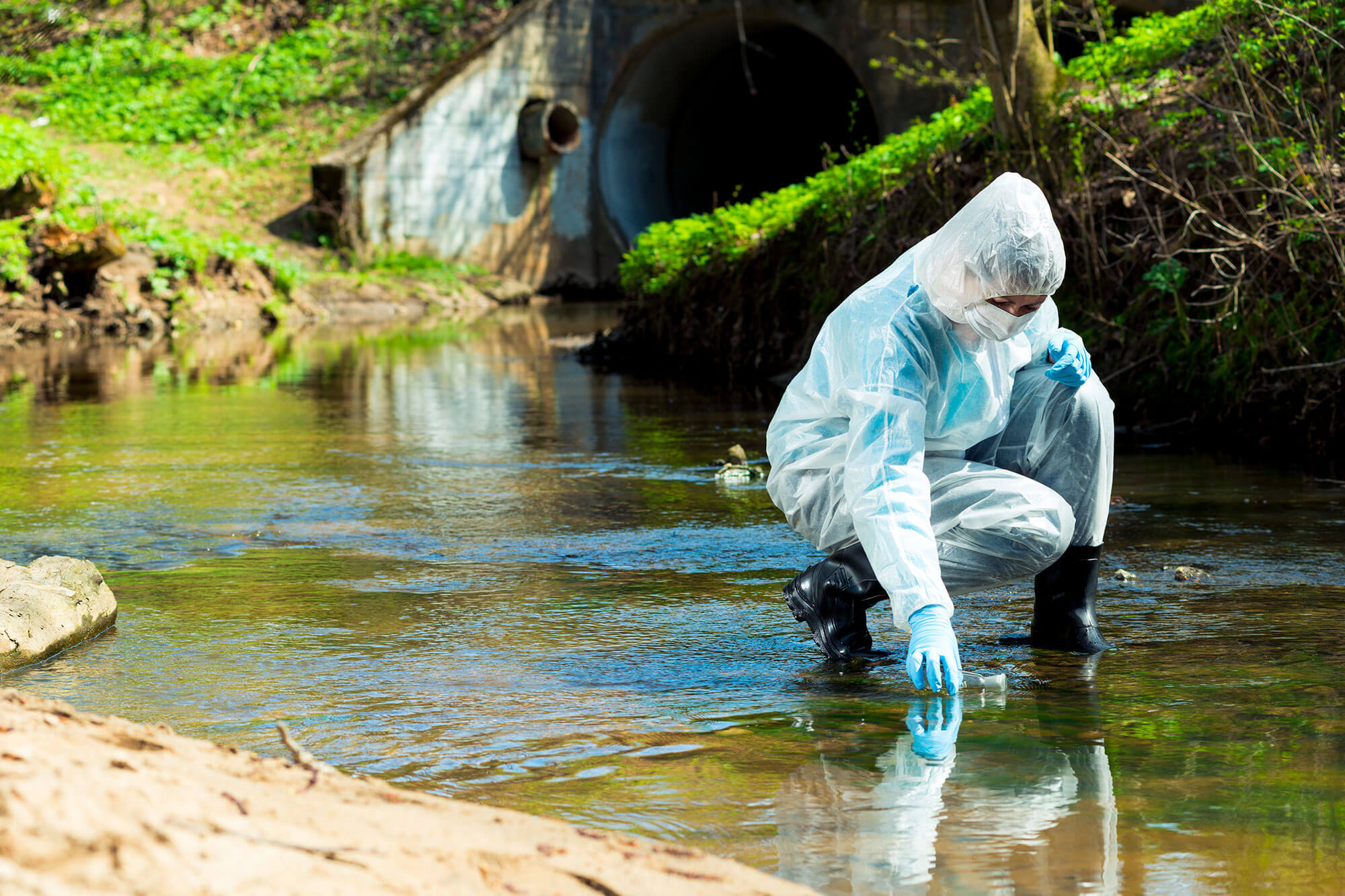
This group of substances already sounds difficult to tackle: volatile halogenated hydrocarbons, VHHC. And indeed, once they have seeped into the soil, they are hardly controllable. VHHC are used to degrease metals, remove paint, or clean textiles. These chemicals are particularly well studied, as they are found in many locations – including at an industrial site in southwestern Germany. There, Bernadette Bohnert, Günter Dernai, and Thomas Osberghaus dedicated themselves to a special experiment. They attempted to neutralize the VHHC compounds using a biological-chemical in-situ reduction. “The remediation of contaminated sites was also necessary because the source of contamination was located in a water protection area,” says Bernadette Bohnert, Head of Contaminated Sites at HPC in Stuttgart.
“The remediation of contaminated sites was also necessary because the source of contamination was located in a water protection area.”
– Bernadette Bohnert
Head of Contaminated Sites at HPC in Stuttgart
Projekt-Steckbrief:
In such cases, groundwater is often pumped and continuously treated over many years—this was initially also the approach here. In the short term, such groundwater extraction only has a minor impact on investment or operating costs. However, in this case, the system had a high electricity consumption and exhibited a tailing effect. This describes a typical course of remediation for LHKWs, where concentrations initially drop sharply and then remain nearly constant over a long period. When extrapolated, the concentration trend suggested that this conventional remediation would take more than 10 years to complete—a considerable amount of time.
Given these timeframes and costs, Bernadette Bohnert and her team at GINGER HPC proposed an in-situ remediation method to the client. This method neutralizes contamination directly on site. Their choice was a biological-chemical in-situ decontamination of LHKWs using EHC® from Evonik. This substance can react with LHKW compounds in various ways.
“This substance triggers several reactions, including chemical degradation and microbiological degradation by bacteria, provided that the redox environment in the subsurface is sufficiently low,”
explains Bernadette Bohnert.
To verify the effectiveness of the in-situ substance, the GINGER HPC team carried out several injection drillings. This was not a simple task. The production site, which was contaminated at the time, was by no means shut down, heavily built-up, and the subsurface was compacted. After successfully carrying out the injections, groundwater monitoring was conducted over the course of a year. The results were impressive: the LHKWs were largely transformed through various intermediate stages into non-toxic ethene.
In this case, the in-situ decontamination was comparatively cost-effective, efficient, and highly effective due to the small area involved. For larger contaminated sites and aquifers, however, both effort and costs increase accordingly.
“Based on thorough preliminary investigations, cost-effectiveness analyses, and experience from hundreds of comparable projects, we develop a tailored solution for each individual case,”
explains Bernadette Bohnert.
Weitere Erfolgsgeschichten


I Vostri vantaggi con GINGER HPC
Più di 75 anni di esperienza
Dal 1948 GINGER HPC unisce competenza e precisione in progetti ambientali e ingegneristici per soluzioni affidabili che durano nel tempo.
Forte rete internazionale
Con sedi in tutta Europa come parte del gruppo Ginger e membro fondatore della Inogen Alliance uniamo prospettive globali a competenze locali in ogni progetto.
Eccellente sostenibilità
Dalle certificazioni internazionali ai premi di settore i nostri riconoscimenti rappresentano precisione ingegneristica standard elevati e un continuo impegno per l’innovazione.
Unsere Leistungsbereiche
No child pages found for the selected parent.
Haben Sie Lust auf Kolleg:innen in Ihrer Arbeitsumgebung, die mit Leidenschaft und hoher Qualifikation in Projekten arbeiten?
Sie mögen es, langfristige Kund:innen-Partnerschaften aufzubauen und sich in immer neuen Projekten weiterzuentwickeln? Sie sind gerne dazu bereit, Ihren Kund:innen den bestmöglichen Service zu bieten?
Dann sollten wir uns kennenlernen, denn wir suchen Sie zur Verstärkung unseres GINGER HPC-Teams.